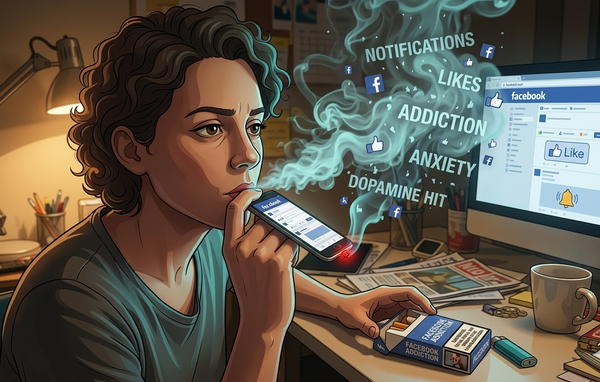
Are prediction markets fueling a gambling epidemic?

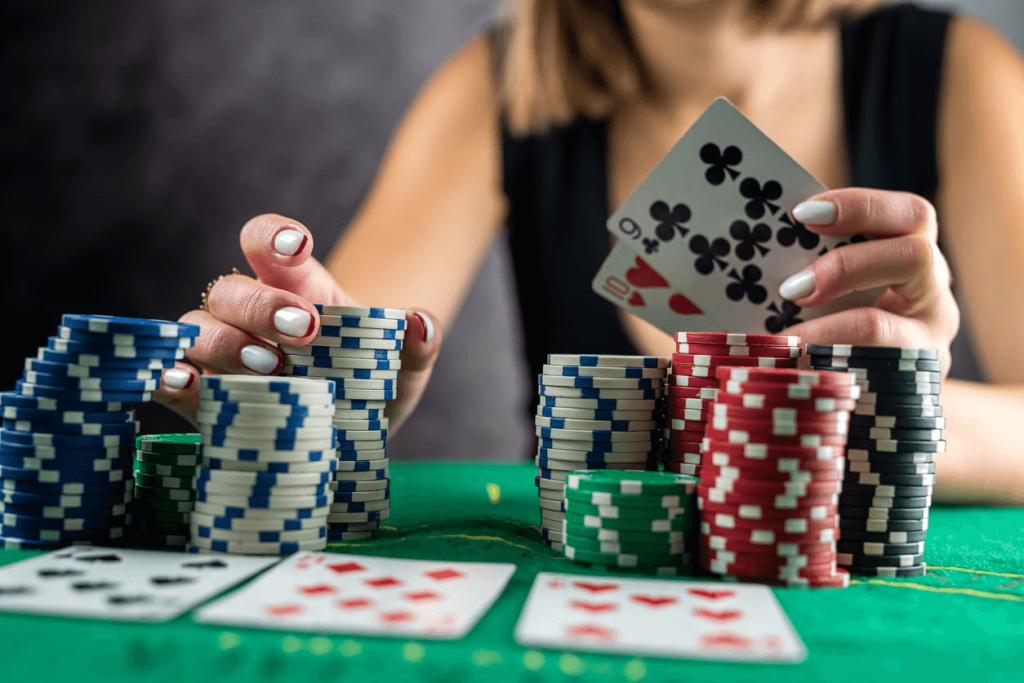
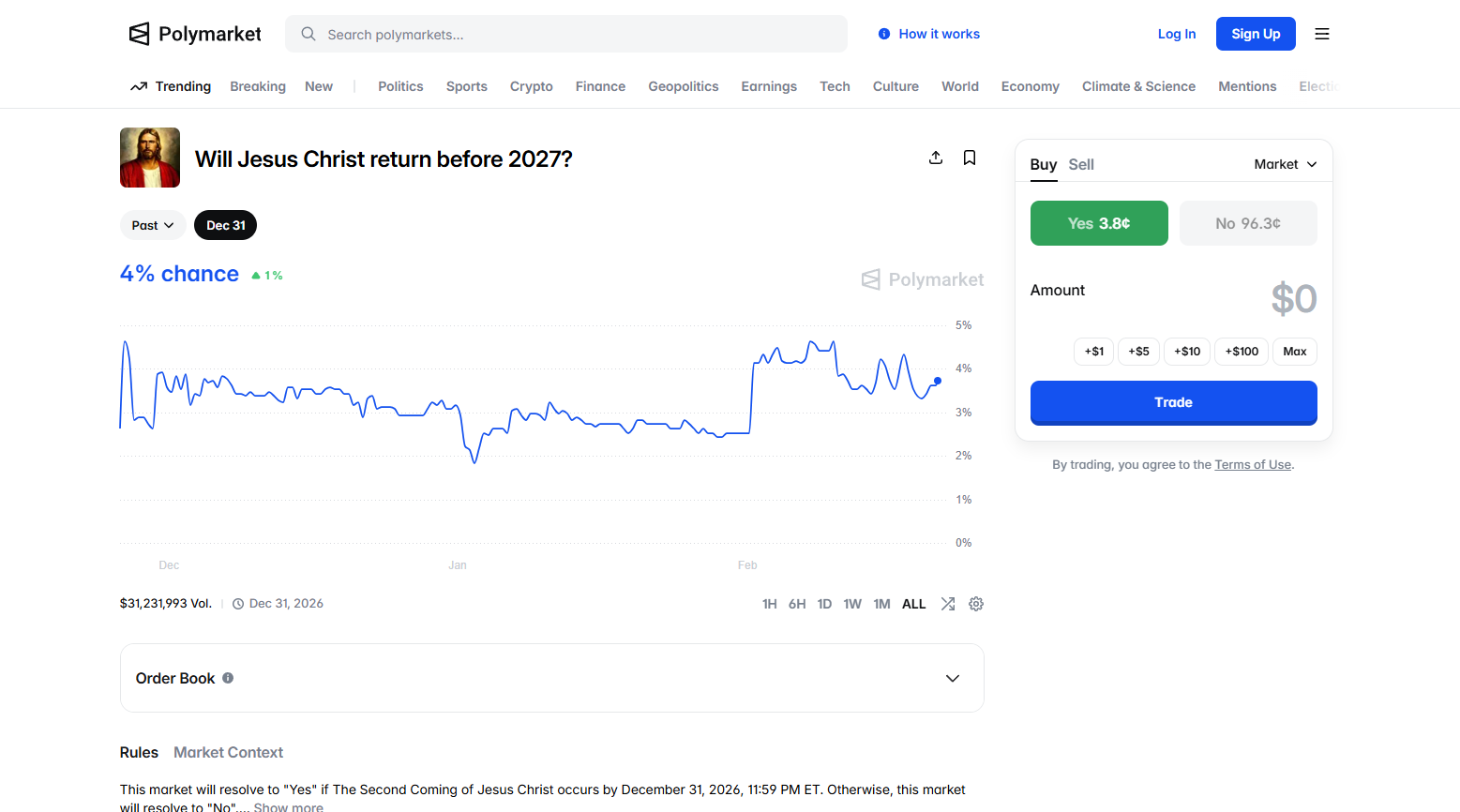
The term "prediction market" sounds so scientific, doesn't it? Like "derivatives," the financial instrument they resemble. On platforms like Polymarket and Kalshi, people place a bet on the likelihood of certain outcomes, whether political or sporting or anything else (want to bet on whether Jesus will return this year?). But the term "bet" in the previous sentence reveals what prediction markets actually are: Betting. In other words, gambling. Is that bad? After all, the stock market is a form of betting, and millions of people trade stocks. The same goes for other markets — currencies, commodities, etc. Derivatives like "puts" and "calls" let you bet on whether a certain stock will rise or fall without having to actually buy or sell it; instead, what you buy is the option to buy or sell it at some future date. You can also hedge bets by selling a stock "short," meaning you borrow shares and then sell them, assuming that the price is going to fall.
Sounds like gambling, doesn't it? However, it is also regulated, and in the past, traders needed to pass a variety of tests to engage in it, and investors had to pass certain requirements before they would be taken on as clients. The investment industry was in many ways a kind of priesthood. Over time, the barriers to trading stocks and pretty much anything else have been steadily lowered — thanks in part to regulation, and in part to the internet. Now, anyone can open an e-trading account and trade stocks with the click of a button on a mobile app. Firms like Robinhood have become huge by offering this ability to anyone, no matter how ignorant they might be about the stock market, and the result has been a kind of viral storm around certain "meme" stocks, with GameStop being the poster child. In 2021 it soared in value based largely on vibes.
In much the same way, the barriers that used to limit sports betting have been eroded and in some cases removed with the stroke of a pen: the U.S. Supreme Court ruled in 2018 that bans on betting were unconstitutional, and since then we've seen an explosion of apps like FanDuel and DraftKings. Just as TikTok offers a never-ending scroll of funny videos, sports-betting apps give you a never-ending feed of things you can bet on, including things like "parlays" (where you bet on multiple outcomes). This kind of thing used to be known only to bookies and other ne'er-do-wells who hung around the dog track, or took calls in smoky backrooms, like the Irish gangster family in Peaky Blinders. If you didn't pay, a large man with forearms like tree trunks would break your legs or threaten your entire family. Now, you can bet thousands of dollars on the toss of a football, all from your phone while you are standing in line at Whole Foods.
Shayne Coplan, the 27-year-old founder of Polymarket, which is theoretically worth $10 billion, says prediction markets are "crowdsourced intelligence," a kind of holy grail that many have sought ever since the internet started connecting people in large numbers. Most people have no idea when the U.S. will attack Iran, but theoretically there are people out there who know enough to place a bet, and that will eventually move the bet closer to reality over time. This is a great theory! Similar things have been said about the stock market — that over time it is a truth detector. However, it also gets things wrong, even when smart people are involved: one of the biggest financial catastrophes was the sub-prime crisis in 2008, which involved risky derivative bets made by a fund that included two experts who literally won a Nobel Prize. They failed to take precautions in the event of a "black swan," and the Federal Reserve had to intervene.
Clearly that kind of thing isn't going to happen with sports betting or prediction markets (or at least probably not any time soon). My point is just that even smart people make mistakes, and stock prices behave strangely for all kinds of reasons for long periods of time, many of them psychological. So assuming that a large enough pool of bettors or predictors will arrive at the right answer is likely to make an ass out of u and ming. And in the meantime, making it childishly simple for people to bet their salaries and 401(K) plans and mortgages on the flip of a coin using an addictive digital app seems like a recipe for disaster in a social sense, at least according to some experts who specialize in gambling addiction. From a Harper's magazine piece published earlier this month:
Kobie West, the clinical director of the Dr. Robert Hunter International Problem Gambling Center, in Las Vegas, compares the present moment in gambling addiction to the days of blissful ignorance that allowed America’s opioid epidemic to spiral out of control. Both public-health crises, West argues, were fueled by rampant advertising and ease of access. He estimates that we will look back in several years’ time in horror.
Note: In case you are a first-time reader, or you forgot that you signed up for this newsletter, this is The Torment Nexus. Thanks for reading! You can find out more about me and this newsletter in this post. This newsletter survives solely on your contributions, so please sign up for a paying subscription or visit my Patreon, which you can find here. I also publish a daily email newsletter of odd or interesting links called When The Going Gets Weird, which is here.
It's not gambling it's investing!
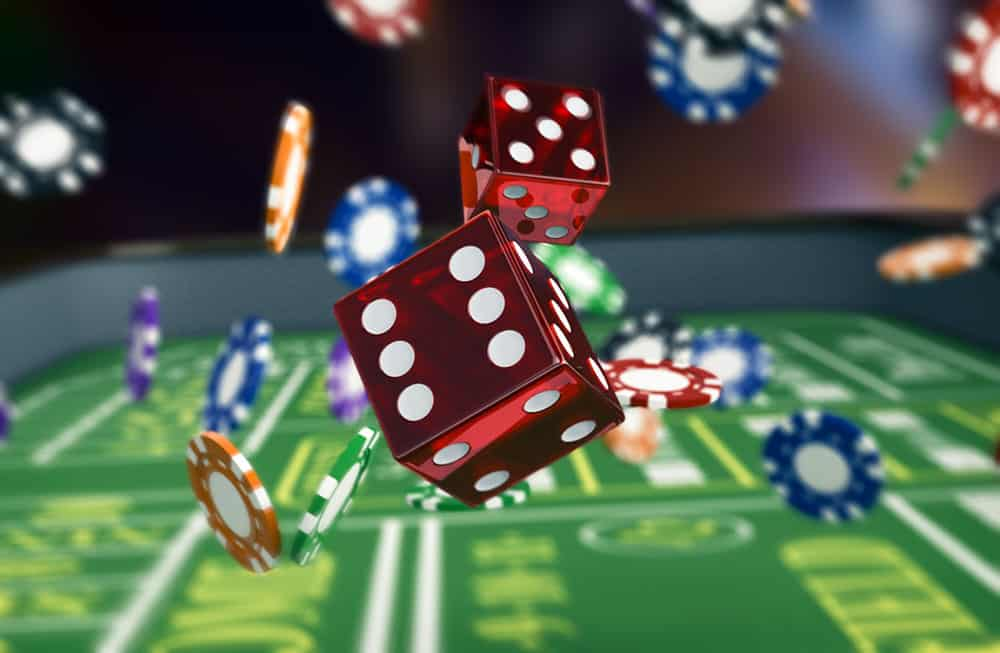
According to a recent piece in Nautilus magazine, an investigation in Jama Internal Medicine showed that online searches for help with gambling addiction have soared: They’re up 23 percent nationally since 2018. People in their 20s are the fastest growing group of gamblers, but many start as young as 12, often through video games. Many media outlets now have partnerships with predictive markets or sports betting sites, and some reporters say they feel pressured to normalize betting in their reporting (Polymarket recently announced a partnership with the newsletter platform Substack). Every sports report on some channels and feeds is peppered with mentions of FanDuel or Bet365, and many of these programs and podcasts are sponsored by betting companies. Timothy Fong, an addiction psychiatrist and co-director of the Gambling Studies Program at the University of California in Los Angeles, told Nautilus that the more normal it seems, the more dangerous it becomes:
"You can dress it up with different clothes and different makeup and different whatnot, but at the end of the day, what is it? It’s an experience where you’re putting something of value at risk, in this case money, on an event of uncertain outcome, in the hopes of winning a larger reward. Any way you slice it, that’s gambling. They’ll say prediction is based on your own research, it’s a skill-based activity. These companies say, “We’re not gambling, we’re not gaming, we’re investing, we’re financial. We’re allowing the little guy to get in on making money off his or her knowledge about human events.” But they don’t talk about the risk of losing your investment. And these markets aren’t regulated."
Fong compared prediction markets to crack cocaine, which quickly turned into a massive problem in the US in the 1980s. There had always been access to cocaine, but crack created a whole new generation of addicts because it was much more potent and much more addictive. The same thing arguably happened to opioids — painkillers have existed for a long time, but Oxycontin was a hundred times worse. A similar thing has happened with gambling, says Fong. "The types of products that are out there now are way more addictive, faster, more potent, more accelerated," he said. "So for Generation X, if I wanted to invest in the stock market in the ’90s, I had to physically go into an office, wait, put an order in, write a physical check. Then E*TRADE came along, and you could do it from your home.” We've accelerated two things, he says: the speed at which you can make financial transactions, and the addictive nature of some of these products, which are expressly designed to get you to spend more.
As the Wall Street Journal pointed out recently, things could have turned out very differently, at least as far as prediction markets like Polymarket are concerned. In 2024, founder Coplan's penthouse apartment in Manhattan was raided by FBI agents, who seized his phone and other equipment, as part of an investigation into whether Polymarket — which uses cryptocurrency for trading — was violating laws against money laundering. A little over a year later, the Justice Department says it has dropped the probe, and Polymarket cut an investment deal with the parent company of the New York Stock Exchange, among others, which helped boost its market value to $9 billion and gave the company a legitimacy in U.S. markets it had not had up until that point. By last year it had reportedly accumulated a total trading volume of more than $20 billion.
So what changed? To put it simply, the government changed. Whereas Joe Biden's administration was focused on regulating prediction markets and going after them for potential financial mismanagement, fraud, and other irregularities, Donald Trump's government has done the exact opposite — they have poured fuel on the fire. Donald Trump Jr.'s venture firm is an investor in Polymarket, which he was an early supporter of, and his father has dropped charges against a wide range of financial players who had been under investigation, including numerous crypto investors and coin exchanges. One of those was Binance, the world's largest crypto trading firm, which had already pled guilty to exactly the same kind of money-laundering charges that Polymarket faced.
Skating towards disaster
Apart from addiction, or the kind of dumb betting that people often engage in on sports wagering apps (or the stock market), there are additional risks with prediction markets, according to some experts. Rajiv Sethi, a professor of economics at Barnard College who studies prediction markets, told the WSJ that what concerns him the most is that Polymarket doesn’t know the real identities of people who trade on the platform. “What that means is people can do all kinds of things that they would not be able to do on other markets,” he said. That anonymity could allow Polymarket users to trade on classified information. Some believe that has already happened: No one knows who made a suspiciously well-timed bet just before the capture of former Venezuelan president Nicolás Maduro, a bet that won the bettor roughly $400,000.
Part of what seems to be driving the success of prediction markets is a desire to capture the "wisdom of crowds," etc. But part of what's fueling their emergence is likely a wave of speculative investing (if we can call it that) that helped supercharge the world of cryptocurrencies not that long ago, with crypto millionaires being minted right and left, and people paying hundreds of thousands of mostly theoretical dollars for cartoon images of apes in various costumes. After an initial rush of interest, crypto seems to have waned as the price of Bitcoin and other currencies has declined, and all of that speculative hysteria has to go somewhere. Coplan reportedly started Polymarket after his first venture, a crypto outfit called Union Marketplace, failed to gain traction.
According to the Journal, prediction markets were first developed in the 1980s by three economists from the University of Iowa, but until recently no one was able to turn them into a business because of resistance from the CFTC — the Commodity Futures Trading Commission, which regulates derivative markets, including futures, swaps and certain kinds of options. This was the agency that pursued a case against Polymarket, and ultimately fined the company in 2022 for failing to register as a futures trading entity. “Shayne might end up a billionaire, or a CFTC casualty,” an investor in Polymarket’s seed round wrote in a 2020 memo. As part of the settlement with the agency, Polymarket agreed not to allow American citizens to use its services for four years, but it is widely assumed many did so anyway by using crypto platforms that offer anonymity.
Rutgers professor Dave Karpf — a former semi-professional poker player — says that prediction markets are just gambling by another name, full stop, and that encouraging gambling the way mobile apps and services do is inherently wrong. Over $1 billion in bets were placed on the Super Bowl, he says, and that included over $100 million in bets on what halftime performer Bad Bunny’s first song would be. "This is bad, and I think we all know its bad, and everyone ought to say so." Kalshi says it wants to financialize virtually everything and create a tradable asset out of literally any difference in opinion. "I wish we still lived in a society where someone in a position of authority would ask the obvious follow-up question: “Are you kidding me? Why?” writes Karpf.
Fong notes that gambling is like any other kind addiction — when you normalize the activity, you decrease perception of harm. And I'm going to give Karpf the last word in this piece, because my thoughts on the topic mirror his very closely. "Set aside how this leads to truly impossible levels of insider trading and corruption," he writes. "Just think for a moment about how it degrades every facet of society. Here’s what I believe: gambling ought to be legal. But it ought to be legal in the same way that cigarettes are legal. It should be heavily regulated, difficult to access, with zero advertising and a ton of social stigma." As writer and comedian Josh Gondelman put it in his recent newsletter: “Gambling should be something you have to hide from your wife and children. It should not be an activity that Kevin Hart begs you to do at every commercial break."
Got any thoughts or comments? Feel free to either leave them here, or post them on Substack or on my website, or you can also reach me on Twitter, Threads, BlueSky or Mastodon. And thanks for being a reader.