Is Substack good or bad? Yes

If you aren't a writer or a journalist or someone else who cares deeply about platforms for writing and publishing, this week's newsletter probably isn't going to be that interesting for you. As I put it in a previous Torment Nexus newsletter about Substack a year or so ago, it would be nice to think that lots of people care about the nuances of how news and information gets published, and the challenges that the modern web and social media and technological monopolies pose to our information ecosystem, and yet a long career as a journalist writing about technology and publishing has convinced me that this is not the case! But as someone who fits all three of the descriptions I mentioned above, I've been fascinated with Substack ever since it launched in 2017 in a wave of optimism about online publishing, and I've watched it evolve over the years into a thing that some people love and some people hate.
The reason for the love is relatively easy to describe: writing online is hard – not just the writing part, but the rest of it as well, including finding and monetizing an audience, etc. The main benefit of Substack is that it automates a lot of that, for writers who don't want to have to think about the mechanics, or having to get down in the machinery and fiddle with the levers and pulleys that make online publishing work. You just click "publish" and Substack does the rest. As co-founder Chris Best put it in a recent post: "The deal most of the internet offers creators goes something like this: We’ll give you reach if you give us your audience. Perform for the algorithm. Hope for a minority share of a platform’s own revenue, or figure out the money part yourself. Build your following on our platform, under our rules, subject to our priorities—and if any of that changes, good luck. Substack is built on a different theory: Give publishers a direct connection to the people who believe in them. Let people pay for the work they value."
The numbers make it clear that lots of people see the benefits of this model. According to Substack, more than 100,000 publishers make money on Substack using the subscription model, and the top ten collectively make more than $100 million a year. I am one of those people, as some of you may know: I publish this newsletter as well as my daily When The Going Gets Weird collection of interesting links using Substack – although I also publish them both on the open-source Ghost platform, as well as on my personal blog at mathewingram.com (which is offline at the moment, illustrating the benefits of using a service that isn't hosted on an old PC in your daughter's living room and maintained by an English major). I make a few hundred dollars a year from Substack at most, probably because I haven't put much effort into building my audience there, but I decided when I launched my newsletters that publishing in multiple places was something I wanted to commit to, and I am comfortable relying on the donation or patronage model of publishing (although my accountant is not happy about it).
I chose that model in part because I didn't want to put all of my writing eggs in one basket, perhaps in part because I have been burned in the past by some platforms continually changing their business models (hello Medium), but also because I've always been committed to the idea of the open web publishing – ever since I first published a personal website in the late 1990s. And I didn't want one platform to control or have any degree of authority over what I chose too publish. This is one thing that some people seem to inherently dislike about Substack: namely, the idea that it essentially controls a writer's relationship with their audience. Substack has emphasized from the beginning that writers can take their email lists and other data with them if they want to leave (and some well-known writers have done this successfully), but the reality is that most people won't, and so despite the guarantees, Substack effectively owns the connection between writers and the people who read – or want to read – what they are writing.
The other reason some people dislike Substack is the company's platforming of neo-Nazis and other unsavoury types like transphobics, etc. This flared up in 2023, when the company was accused of "platforming Nazis" and co-founder Hamish McKenzie responded by saying the company allowed these accounts to stay because Substack was committed to free speech. As a number of critics noted at the time, however, allowing free speech on your platform is one thing, but actively recruiting, promoting, and in many cases monetizing harmful or hateful speech is a very different thing. This is around the time when Casey Newton left Substack and took his Platformer newsletter with him, as did Ryan Broderick and his newsletter Garbage Day. As The Atlantic put it: "The company wanted to have it both ways: to exert the cultural influence of a major media company without shouldering any more responsibility than is expected of a mere service provider, such as Gmail." This problem has not gone away.
Note: In case you are a first-time reader, or you forgot that you signed up for this newsletter, this is The Torment Nexus. Thanks for reading! You can find out more about me and this newsletter in this post. This newsletter survives solely on your contributions, so please sign up for a paying subscription or visit my Patreon, which you can find here. I also publish a daily email newsletter of odd or interesting links called When The Going Gets Weird, which is here.
Having it both ways
Wanting to have it both ways on moderation and editorial filtering is another symptom of what I see as the fundamental tension at the heart of Substack's business model. In some ways it is just a service provider like Ghost or Buttondown or Beehiiv or WordPress – or Patreon, for that matter, which has been edging into the newsletter hosting and automation space, and has been wooing writers away from Substack. At its core, it is just an automation engine that helps writers make their writing look good, helps them distribute it, and gives them the tools to get paid by their fans. But that's not enough for Substack – it also has a social feed called Notes, which is like Twitter or Bluesky, and it has recommended lists and other features. And the main reason it has these features is not necessarily because writers need them or want them – it is also because Substack is funded by venture-capital investors, and it wants (and needs) to show its financial backers that the model they backed is working.
Substack raised another $100 million last year from a group of investors that included The Chernin Group as well as Andreessen Horowitz, a Series C round that valued the company at over $1 billion. At the time, that was about 24 times Substack's annual revenue, which is a significant multiple for something that is fundamentally a media company, and I think that helps explain a number of recent moves by Substack, including the fact that it has changed its mind about ads on the platform. Not that long ago, Substack's founders insisted that they were "100% focused on subscriptions" as a revenue source, but it has also watched as some of the company's most successful writers have sold ads and done paid sponsorships, so late last year it was reportedly conducting a beta test of sponsorships. Co-founder Hamish Mackenzie said the ads are consistent with the principle that "Substack makes money only when creators make money."
But what if not enough creators are making money? Some have started wondering if Substack's growth is slowing. In May it said it had "more than five million subscribers," but that came over a year after it announced that it had hit the 5 million mark. Prior to that point, the company had been adding roughly 1 million paid subscribers per year. Some Substack writers have complained about their subscriber growth slowing. In May, The Verge wrote about a number of writers and publications such as The Ankler leaving Substack for Ghost and other services not because of the Nazi problem but because they just weren't making as much money as they had been. Sean Highkin, creator of a newsletter called The Rose Garden Report, said that when he first joined Substack the company featured him and funneled a lot of traffic to him, which led to a good amount of growth, "but once I wasn’t one of the ‘new recruited talent’ they could tout, they stopped featuring me and I saw my growth stagnate.”
In a post on Substack's Notes feed in July, former Washington Post writer Taylor Lorenz gave voice to a fear that some writers on the platform have – namely, that the introduction of a new Follow feature has been eating into their paying subscriber numbers. Lorenz wrote that she has over 200,000 followers and yet "my paid subscriptions have fallen off a cliff. In the past 6 months my paid subscriptions have plummeted, despite me making no changes to my content, yet my followers are skyrocketing." Lorenz went on to say that the numbers changing so rapidly makes her skeptical of Substack as a platform, because it feels "more and more like this app is becoming another social media feed. I wish I could turn off the ability of anyone to follow me. Because what good are followers when follower growth seems correlated with losing paid subs?"
In the case of The Ankler, which was one of Substack's most successful publications, it sounds like it may have just outgrown the service and decided to make the move to a new service called Passport in part because it wants to create a full-fledged media company around its content. In a kind of full-circle moment, Passport is a recently-launched partnership between WordPress and Stratechery author Ben Thompson – whose one-man newsletter company was the inspiration for the creation of Substack in the first place. There have been reports that other Substack publications are also thinking about leaving, including The Bulwark, Mehdi Hasan’s Zeteo, and Emily Sundberg’s Feed Me. And last October, when Culture Study creator Anne Helen Petersen moved from Substack to Patreon, she raised the spectre of something that I think every Substack writer (or user) has thought about, when she said: “I didn’t want to be on a platform that had been steadily — and not so stealthily — enshittified.”
The spectre of enshittification
If there's one thing that tends to unite many venture-funded social and media services, it is the tendency for them to become "enshittified," as Canadian author and activist Cory Doctorow has put it. In almost every case, this happens through the addition of "features" that users don't want in an attempt to drive either advertising revenue or some other benchmark (or the flipside of this phenomenon, which is the removal of features that actually are useful, because they don't contribute enough to revenue). Here's the rest of what Petersen had to say about the decision to move:
I looked at the Trending Topics and thought, for the umptheenth time in the last three years: I don’t want to be here. I don’t want to be deeply invested in a platform whose business model is rooted in snagging readers through algorithmic manipulation. I don’t want to make money for founders who refuse to draw a line about platforming hate speech. I don’t want to serve as a one-person IT department for my readers and listeners who can’t resolve their account problems because Substack’s “support” has been reduced to a bot. I don’t want to constantly fight Substack’s inclination to turn “readers” into “followers” who live on their app.
It's easy for writers to buy into a model like the one Substack is offering, because it takes so much off your hands – the distribution is one of those things, but it makes payment easy, and maybe it even promotes your work inside its network. Those are good things! But then you find out that your work appears inside an app that is also trying to capture engagement with a social network, and promoting things with algorithms (including neo-Nazi content), and then it adds sponsored content, and then it says it's launching TV apps and setting up a partnership with a so-called "prediction market" called Polymarket, and then you start wondering, as Anne Helen Petersen did: Is it a service for writers to reach readers, or is it a venture-capital backed startup that is scrambling to do whatever it can to justify its theoretical market value? Former Mother Jones editor Ana Marie Cox wrote about the company's model and had this to say:
Everything suspect about Substack stems from a desire to be more like a sticky destination and less like a publisher. You can ignore their posturing about free speech and just look at how they’re leaning harder and harder into audience capture and engagement. They’re offering audio, video, short-form posts, “discoverability.” They want to keep readers in their app listening, watching, interacting—anything but reading newsletters in their inbox as God intended. Indeed, Substack is now hunting bigger game than any legacy media creature. In January, they announced a $20M “creator accelerator fund” to lure Tiktokers (or anyone else with at least $2000/mo in existing subscribers). That’s almost half their revenue on a bet that gets them further and further away from a sanctuary for outcycled journalists and closer and closer to the chaos chum bucket that newsletters were supposed to stand out from.
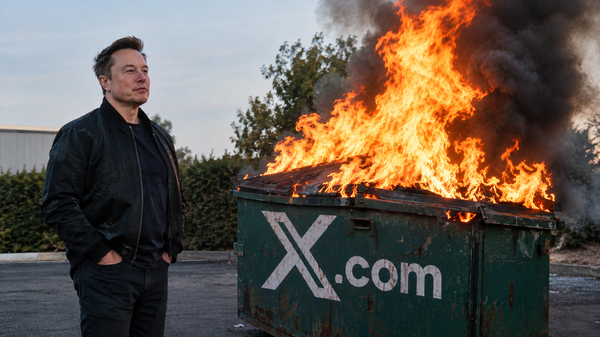
Substack is "utterly dependent on the whims of its investors," Cox wrote, and every round of capital deepens the expectation of a big payoff — a public offering, an acquisition, etc. The nightmare scenario, as Cox noted, is that eventually Substack's funders get desperate for a quick exit, so they sell to someone who sees it as their "personal ideological playpen," like Elon Musk did with Twitter (Musk has mused in the past about wanting to buy Substack). "Imagine the enshittification of Twitter, but with thousands of journalists locked in because that’s how they hoped to make a living, not just fuck around micro-blogging on company time," Cox writes. Luckily, if that does happen, there are open-source services like Ghost and Beehiiv and WordPress. Which is yet another reason why I think it is so important (for me at least) to get used to publishing in multiple places, on multiple platforms. Lock-in is anathema.
If you liked this newsletter (even if you didn't agree with it) please consider upgrading to a paid subscription, or donating through my Patreon. Got any thoughts or comments? Feel free to either leave them here, or post them on Substack or on my website, or you can also reach me on Twitter, Threads, BlueSky or Mastodon. And thanks for being a reader.