Social media and teen mental health: There is no smoking gun

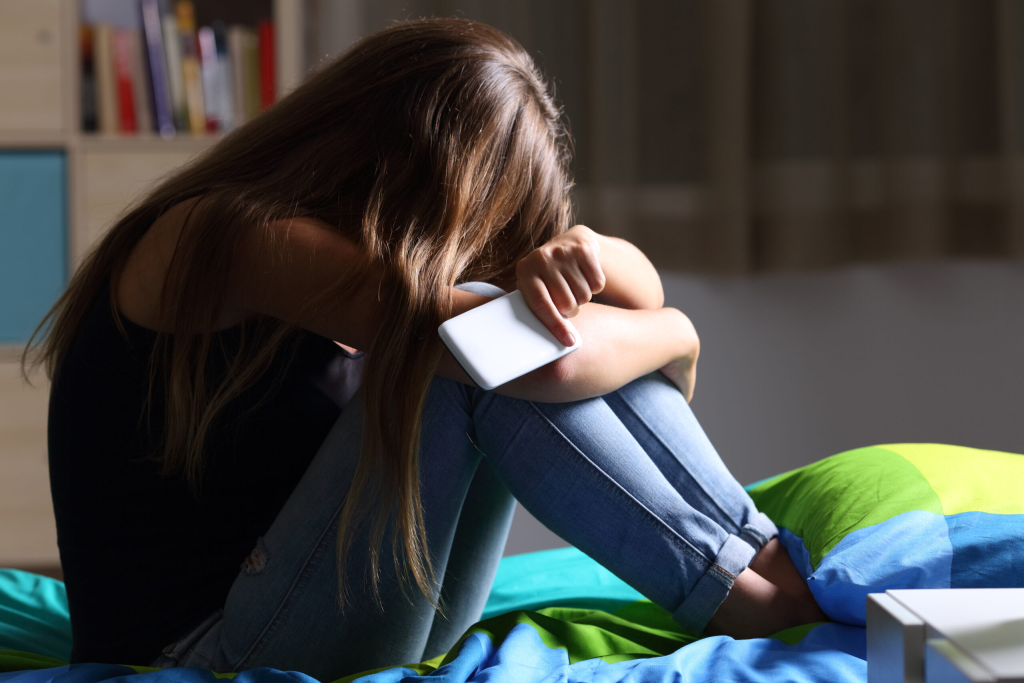
As I wrote in a previous edition of Torment Nexus, the Australian law banning kids under 16 from using social media is the first of its kind, but it was not the last by any means. The French parliament just voted to pass a similar law, and Malaysia's new law went into effect January 1, and the communications minister said the government is looking to Australia for guidance on implementing it. Denmark also appears to be moving toward a ban for users under 15, with parental consent allowed from age 13, and Norway is raising the minimum age to 15. The EU recently voted by an overwhelming majority to set a minimum age of 16 for social media, video-sharing platforms, and AI companions, and France, Spain, Italy, Denmark, and Greece are all testing a European age-verification app. These laws are being driven by concern that social-media use is responsible for an increase in rates of teen depression, anxiety and other mental-health related issues. But is there any proof that this is the case? In a word, no — or at least not enough to justify a complete ban on social media use for teens.
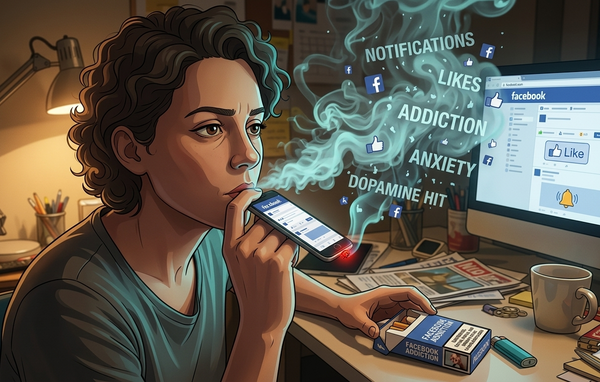
As I noted in an earlier post on this alleged connection — which I think approaches the level of a moral panic — the conventional wisdom is diametrically opposed to the vast majority of research on social media and teen depression. So why do so many people believe it causes harm? Because there seems to be a never-ending stream of news articles claiming this to be true. “Smartphones and social media are destroying children’s mental health,” the Financial Times wrote, while the Guardian described the smartphone as “a pocket full of poison.” Many of these articles are based on books such as The Anxious Generation, by Jonathan Haidt, a psychologist at the Stern School of Business, which talks about how smartphone use and social media have caused an epidemic of anxiety among young people. Haidt provides research that he says backs up his case, but virtually every other study that has been done on this topic disagrees.
That list of contrarian takes includes two major new studies, one done by psychologists in Australia, and another done by researchers at Manchester in the UK. In the first, which was published in the Journal of the American Medical Association's Pediatrics journal, reseachers studied over 100,000 Australian teens (grades 4-12) for 3 years. Interestingly enough, they say their results show that the best possible outcome for a self-reported sense of well-being was moderate use of social media. Heavy use of social media was correlated with a lower sense of well-being, but so was no social media use at all. For teen boys, the outcome of no social-media use at all "became increasingly problematic from midadolescence, exceeding risks of high use by late adolescence." Lack of social media use implied a lack of social connection, which can itself be harmful.
The second study, by researchers at the University of Manchester in the UK, was published in the Journal of Public Health. It looked at the effect on teen mental health of both social media and time spent gaming, either online or on a console. The conclusion: There was no evidence that time spent on social media or gaming frequency predicted later internalizing symptoms among girls or boys. As the researchers put it in their summary: "The findings of this study do not support the widely held view that adolescent technology use is a major causal factor in their mental-health difficulties." Here's how the study's authors described their work in a separate piece they published at The Conversation:
Neither active nor passive social media use was a significant driver of later mental health problems in our sample. If the evidence is so weak, why is the concern so strong? Part of the issue is a reliance on simple correlations. If you find that anxious or depressed teens use more social media, it is easy to assume the social media caused their difficulties. But it is just as likely that the mental health problems came first, or that a third factor, such as school stress or family difficulties, is driving both. Our findings suggest that limiting the hours spent on consoles and apps or measures such as banning social media for under 16s is unlikely to have an effect on teenagers’ mental health in the long term. Policymakers should take note. Worse, such blanket bans may obscure the real risk factors by offering a simple solution to a complex problem.
Note: In case you are a first-time reader, or you forgot that you signed up for this newsletter, this is The Torment Nexus. Thanks for reading! You can find out more about me and this newsletter in this post. This newsletter survives solely on your contributions, so please sign up for a paying subscription or visit my Patreon, which you can find here. I also publish a daily email newsletter of odd or interesting links called When The Going Gets Weird, which is here.
A blunt instrument
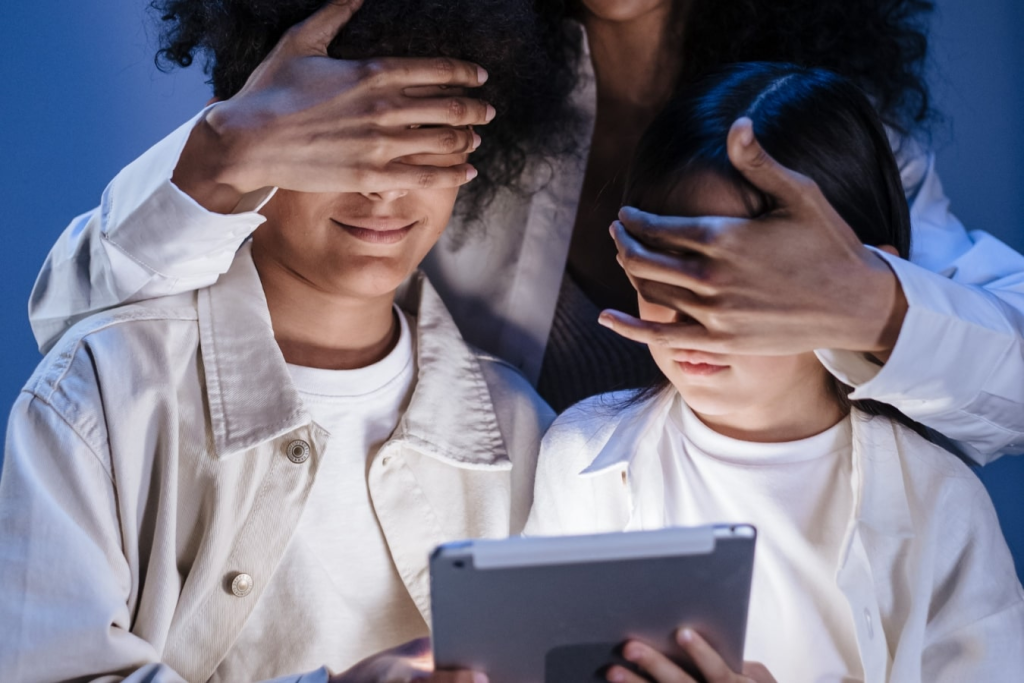
At the risk of appearing self-congratulatory, the researchers' conclusion is almost identical to what I wrote in one of my previous Torment Nexus pieces — not only the part about how correlation isn't the same as causation (in other words, the depression or anxiety might cause the increased social media use instead of the other way around) but also the conclusion that even well-meaning legislation could wind up making things worse for many teens. As I put it in that earlier piece, laws like Australia's are "a blunt instrument that likely won't do much to help the problems we are concerned about. Instead of pinning all of the anxiety and depression and suicidal impulses that a teen might feel on Twitter or TikTok, perhaps it would be better to look at the world around them, and see what changes would make more of a difference." Candice Odgers, a veteran psychologist and one of Haidt's biggest critics, makes a similar point.
I should note that not everyone is convinced by the Manchester study in particular. Casey Newton, who writes the Platformer newsletter (which I highly recommend) took issue with the study in a recent edition, saying it has "some important limitations," including the fact that there was a 12-month gap between measurement of teen well-being and that some harms "may not be detectable in a survey that a teenager takes once a year." I'm not as concerned as Casey about this detail, since I think serious mental health problems would still be obvious, but it's a fair point. He also noted that while the study distinguished between active and passive use of social media and found no significant difference, this might not be enough to capture experiences such as pro-anorexia content, cyber-bullying, etc. Also a fair point, although I would note that virtually none of the research has been done at this level of granularity (and likely should be).
Casey adds that he believes the researchers when they suggest that banning social media for under-16s as Australia has will not instantly improve the median teen’s mental health. However, he says, blanket social-media or smartphone bans do offer a simple solution to any number of ongoing problems on these platforms, including "the ease with which they connect predators to children; addictive mechanics like 'streaks' and notifications that roil classrooms and wreck sleep; predictive algorithms that introduce young girls to disordered eating and related harms; and the unsettled feeling that comes from staring way too long at a feed you had only intended to look at for a minute." These are also clearly bad, and yet I am still troubled by blanket bans. There are harms related to internet use in general as well, but we don't ban teenagers from it.
To be fair, the UK researchers did agree that there were potential harms from social media that don't really have anything to do with the amount of time spent on it, including bullying and extreme content. As The Guardian described it: "The authors stressed that the findings did not mean online experiences were harmless. Hurtful messages, online pressures and extreme content could have detrimental effects on wellbeing, but focusing on screen time alone was not helpful." Not only that, but as Newton notes in his piece, there are significant sub-groups of teens — those who are LGBTQ, for example, or struggling with their sexuality — for whom a blanket ban could actually cause more mental-health challenges and harm. If social media is one of the ways in which you connect with other people who share your worldview or have experience with the kinds of issues you are struggling with, is it fair to force you not to use it? As two members of Australia's human rights commission put it in a letter opposing the new law:
For children in marginalised, remote, or vulnerable situations, social media offers a lifeline. It connects children with disability to peers, resources, and communities they may not otherwise access. It helps LGBTQIA+ youth find acceptance and solidarity. It can improve access to healthcare, particularly for children seeking mental health support. These digital spaces can educate, inform, and remind kids who feel isolated — whether physically or emotionally — that they are not alone. Children and young people have rights to access information and to freely express themselves as they develop and form their identities. A social media ban directly threatens these rights.
Indistinguishable from zero
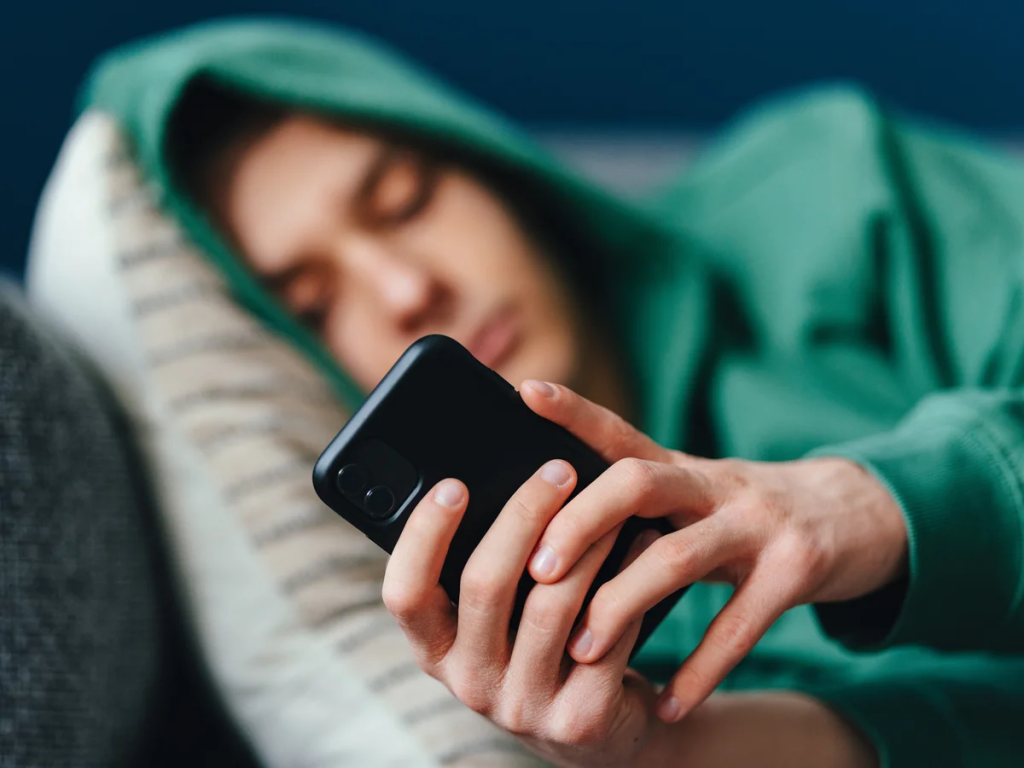
I don't want to belabor the point too much, but given the kind of attention that Haidt's research gets, it's worth reiterating that the sheer volume of research from widely-recognized psychologists has found no evidence for the kinds of harms or epidemic-like conditions that Haidt claims are caused by teen social-media use. Even the evidence that he published in his most recent paper (part of the World Happiness Project) is largely circumstantial: if Snap and Facebook say they are looking at harms, then there must be harm, etc. Also, I am not trying to turn this into an ad hominem argument, but while Haidt is on staff at the Stern School of Business — which I wouldn't associate with leading-edge psychological research — Candice Odgers is the associate dean of research and development at the School of Social Ecology at the University of California in Irvine and the co-director of the Child and Brain Development Program at the Canadian Institute for Advanced Research. In her review of Haidt's book, she wrote:
Two things need to be said after reading The Anxious Generation. First, this book is going to sell a lot of copies, because Jonathan Haidt is telling a scary story about children’s development that many parents are primed to believe. Second, the book’s repeated suggestion that digital technologies are rewiring our children’s brains and causing an epidemic of mental illness is not supported by science. Worse, the bold proposal that social media is to blame might distract us from effectively responding to the real causes of the current mental-health crisis in young people.
Odgers pointed out that an analysis done in 72 countries showed no consistent or measurable associations between well-being and the roll-out of social media globally (specifically, Facebook). Also, findings from the Adolescent Brain Cognitive Development study, the largest long-term study of adolescent brain development in the United States, found no evidence of drastic changes associated with digital-technology use. In a more recent piece for The Atlantic, she wrote that she and others have been studying teens and mental illness, anxiety and depression and their causes for decades, and have failed to find any support for the claim that digital-technology use is a major contributor to adolescent depression and mental-health issues. In fact, she says, a recent study and a review of research on social media and depression found social media is one of the least influential factors in predicting adolescents’ mental health.
The National Academies of Sciences, Engineering, and Medicine released a report in 2023 that stated: "Available research that links social media to health shows small effects and weak associations, which may be influenced by a combination of good and bad experiences. Contrary to the current cultural narrative that social media is universally harmful to adolescents, the reality is more complicated.” The Manchester researchers noted that while one meta-analysis (which looks at a collection of previous studies) found that increased social media use is associated with "a range of negative mental health outcomes," a second published the same year found that "there is no evidence that time spent on social media is correlated with adolescent mental health problems." Even when there is a correlation, the UK researchers say, reported effect sizes are often "modest."
Haidt often cites research by Jean Twenge, a psychologist at San Diego State, to support his claims of a causal link between smartphone use and anxiety in teens. But in a study published in Nature, Przybylski tried to reproduce some of her findings and was unable to show more than a mild correlation. In fact, the average correlation between screen time and well-being "was analogous to the correlation between wearing glasses and well being," and therefore might just be a rounding error or statistical anomaly. A meta-analysis of 226 studies in 2022 involving more than a quarter of a million participants found that the association between social media and feelings of well-being was "indistinguishable from zero." Is this the kind of smoking gun that should be driving governments to ban teens from using social media? I would argue it is not, but no one has asked me for my opinion on the matter. So I am sharing it with you instead :-)
Got any thoughts or comments? Feel free to either leave them here, or post them on Substack or on my website, or you can also reach me on Twitter, Threads, BlueSky or Mastodon. And thanks for being a reader.